
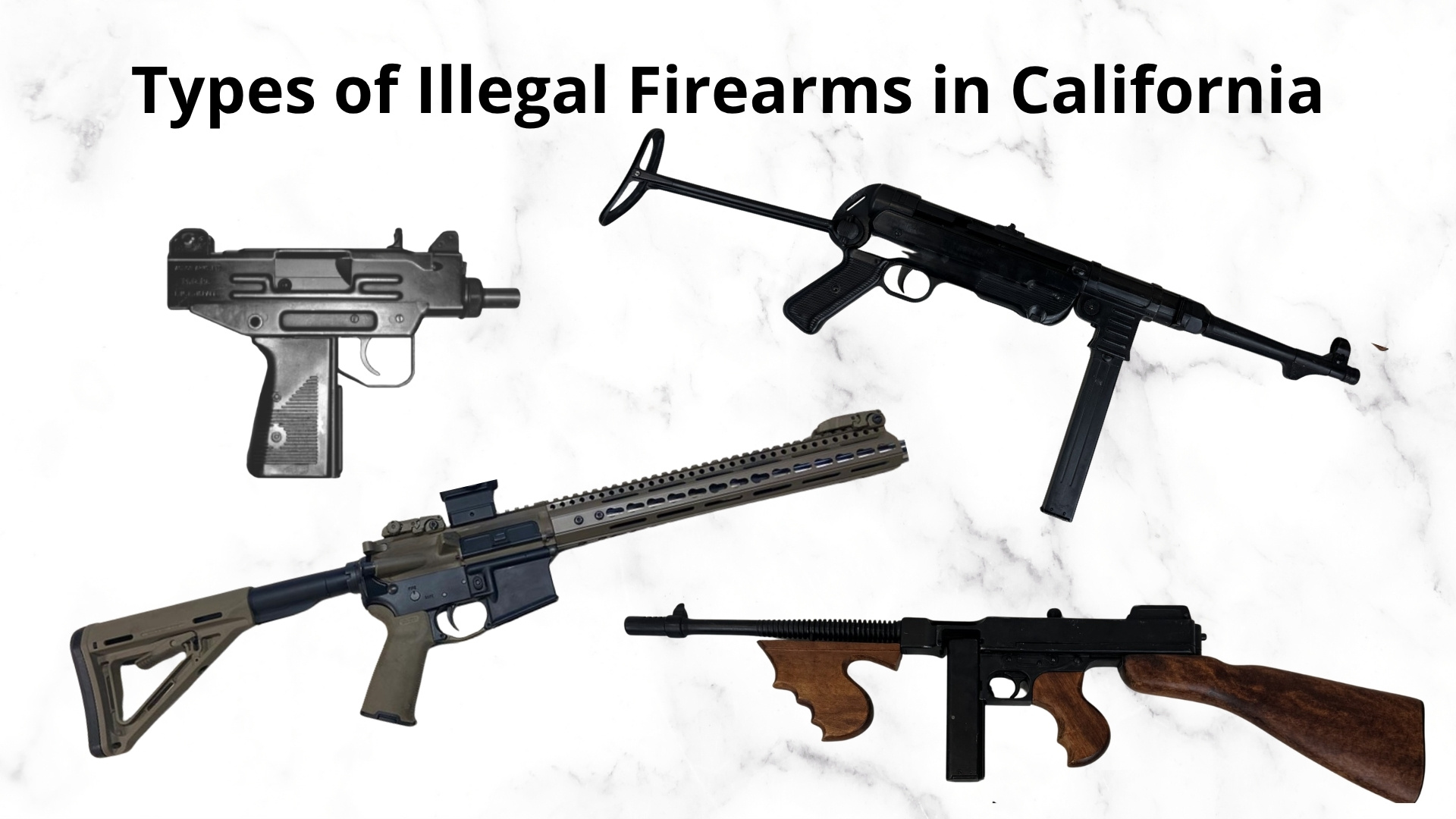
A common situation I see is a family that finds guns after a gun owner dies. The guns may have been stored in a closet, garage, attic, or gun safe for decades. The family may not know what the guns are or whether they are legal. Questions about illegal guns in California can also arise when someone inherits firearms from a person who lived outside the state or moves to California with guns acquired elsewhere.
The gun’s type, age, design, markings, measurements, and installed parts can all matter. These details may affect whether the gun can legally be brought into or possessed in California.
As the owner of California Gun Services, I regularly help families across Southern California identify unfamiliar firearms. I also work with executors, trustees, and fiduciaries handling estates, inherited gun collections, and court-ordered relinquishments. One of the questions I hear most often is, “Is this gun legal in California?”
Which Guns Are Illegal in California?
There is no single list that identifies every firearm that may be illegal or restricted in California.
Federal law prohibits or tightly regulates machineguns, short-barreled rifles, short-barreled shotguns, and certain other firearms. It also restricts firearms with serial numbers that have been removed, altered, or destroyed. California has additional bans and restrictions on certain assault weapons, .50 BMG rifles, and disguised or undetectable firearms.
Whether a gun is legal can depend on its exact make, model, or series. Its measurements, configuration, installed parts, and identifying features may also matter. California also restricts some firearms that do not have required identifying marks. This can include certain homemade or home-built firearms. Marking requirements can depend on when and how the gun was made. The answer can also depend on who possesses the gun, how it was acquired, and whether a registration, permit, or exemption applies.
This guide explains the main categories of firearms that may be prohibited. It also explains the warning signs that mean a gun needs further review.
Start With the Firearm’s Identifying Markings
The markings are the first thing I look at when I inspect an unfamiliar firearm. The words, letters, and numbers stamped or engraved on the gun often provide the first clues about who made it, what model it is, and whether it may require further review. Specifically, markings can help determine whether a firearm may be specifically named in California’s assault-weapon Category 1 or 2.
Look only at surfaces that are already safely visible.
Do not pick up, turn over, rotate, open, unload, or disassemble an unfamiliar firearm to search for a serial number or other markings.
Common Markings a Firearm May Have:
- Maker or manufacturer: The company or other entity who made the firearm.
- Model or series: The name or number used to identify that particular firearm design. Be careful to record the characters exactly, as the specific letters, numbers, spaces, and punctuation can matter when comparing a firearm with a named illegal gun on the California list.
- Serial number: A unique code used to identify an individual firearm from a manufacturer. This number must be the only firearm made by the manufacturer with this identifying serial number.
- Importer: The company that imported a foreign-made firearm into the United States, which may be different from the original manufacturer.
- Caliber or gauge: Indicates the type or size of ammunition the firearm was designed to use.
- Country of origin or other marks: Imported and older firearms may also have country names, proof marks, inspection marks, patent information, or other identifying symbols.
Copy the markings exactly as they appear. Do not shorten a model name, guess at an unclear character, or describe a firearm only as an “AK,” “AR,” or “military-style rifle.” Small differences may be legally important.
Where to Look for the Markings
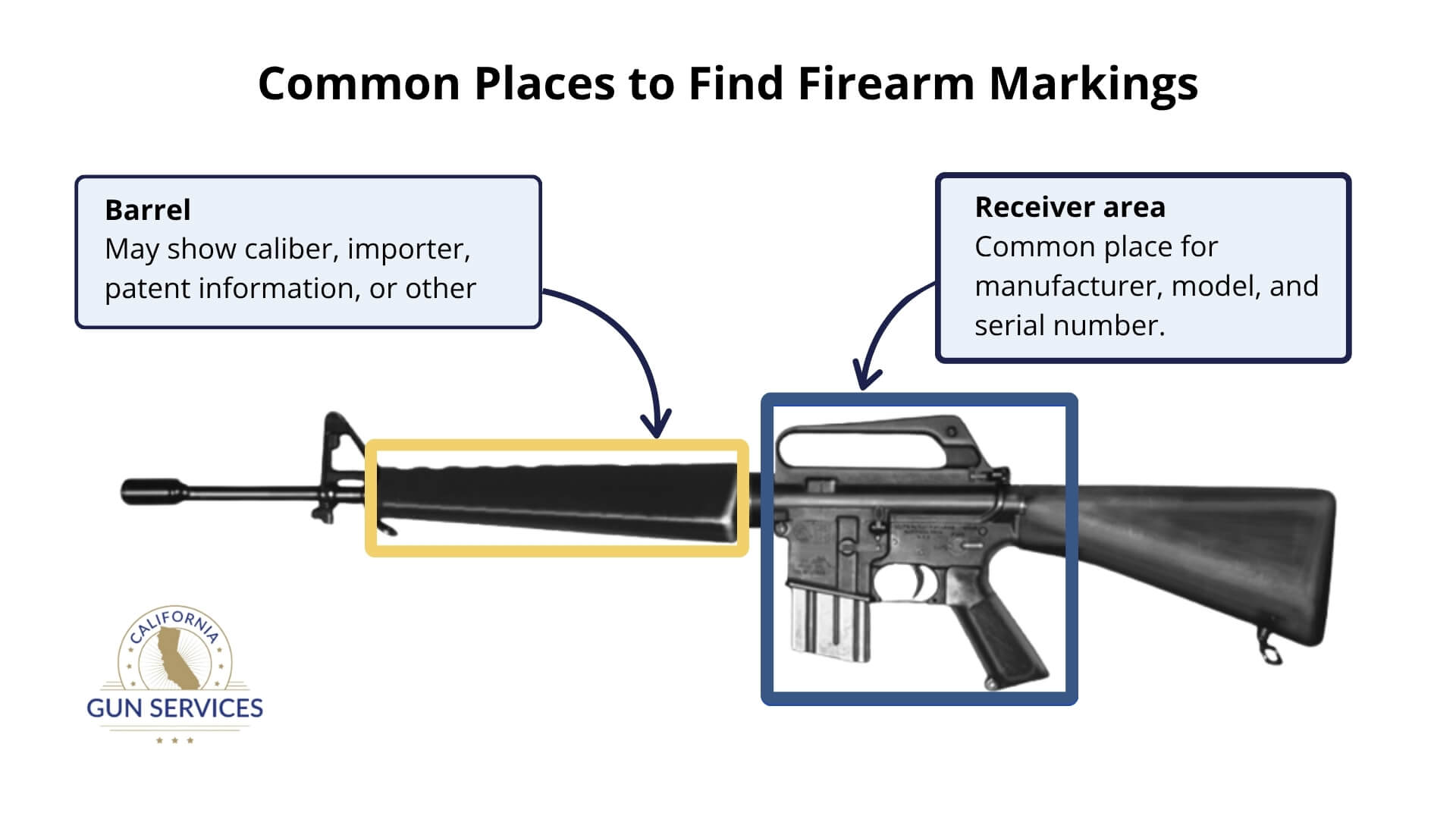
On many firearms, the manufacturer, model, and serial number appear on the receiver or frame—the main metal body of the firearm, often located around or directly above the trigger area. Other markings may appear on the barrel, slide, cylinder, or another exposed metal surface.
When the Markings Are a Warning Sign
Check Whether the Gun Is Named as a California Assault Weapon
Once the visible markings have been recorded, the next question is whether the firearm may be specifically identified as an assault weapon under California law.
California identifies some assault weapons by name. The exact manufacturer and model matter. This is one reason the exact wording stamped on the firearm matters. Two guns may appear nearly identical but have different manufacturers or model designations. One may be specifically named under California law while the other may require a separate review of its operation, magazine system, measurements, and installed parts.
How to Check the Name
- Compare the exact markings with California Penal Code § 30510.
- If the gun may be an AK- or AR-15-series firearm or a variation of these, also check the California DOJ Roster of AK and AR-15 Series Weapons.
Category One: Firearms Named by Type, Series, or Model
California Penal Code § 30510 lists certain semiautomatic rifles, pistols, and shotguns by their type, series, or model. California DOJ commonly calls these Category One assault weapons.
These firearms come from the original list created by the Roberti-Roos Assault Weapons Control Act of 1989. The examples below are included only to show the kinds of names that appear in the law. They are not the complete list.
Examples of Named Firearms in Penal Code § 30510
- Rifles: Beretta AR-70, Springfield Armory BM59, Springfield Armory SAR-48, Steyr AUG, Sterling MK-6, and Bushmaster Assault Rifle.
- Pistols: Intratec TEC-9, UZI, specified MAC-type pistols, Calico M-950, and Bushmaster Pistol.
- Revolvers: Penal Code § 30510 does not provide a separate list of ordinary revolver handguns. A shotgun with a revolving cylinder is a different issue and is covered by California’s characteristic-based assault-weapon rules.
- Shotguns: Franchi SPAS 12, Franchi LAW 12, Striker 12, and the Streetsweeper type S/S Inc. SS/12.
This is not the complete list. Review the current text of Penal Code § 30510 before drawing a conclusion about a particular firearm.
Category Two: Listed AK- and AR-15-Series Firearms
California separately identifies specified AK- and AR-15-series variations. California DOJ commonly calls these Category Two assault weapons.
For these firearms, the manufacturer-and-model combination may be the key. For example, an “AR-15-style rifle” is only a general description. The markings may instead show a manufacturer such as Colt, Bushmaster, DPMS, Knights, or another company, followed by a specific model or series.
Examples From the DOJ AK/AR Roster
Examples of Category 2 Assault Weapons shown on the DOJ roster include Bushmaster XM15, Colt AR-15, Colt Match Target, Colt Sporter, DPMS Panther, Knights SR-15 and SR-25, Norinco MAK 90, Arsenal SLR and SLG, and Kalashnikov USA Hunter Rifle/Saiga.
This is not the complete roster. Check the exact manufacturer and model shown on the firearm against the DOJ document.
Exact identification comes first. If the firearm is not named, the next step is to review its operation, magazine system, measurements, and installed parts under California’s characteristic-based definitions.
Official resources: California DOJ Assault Weapons Laws, California Penal Code § 30510, DOJ Roster of AK and AR-15 Series Weapons, DOJ Assault Weapon Characteristics, and DOJ Assault Weapon Definition Regulations.
When Markings Are Not Enough: Assault Weapons Defined by Their Characteristics
Many firearms are not restricted because of their name. California may instead classify a firearm as an assault weapon because of how it operates, how ammunition is held and fed into it, its measurements, and its combination of installed parts. The California Department of Justice commonly refers to these as Category Three assault weapons. (Cal. Penal Code § 30515.)
These factors usually cannot be determined from a maker and model name alone. A person unfamiliar with firearms should not be expected to identify every legally defined feature from written descriptions or online photographs.
Rifles
A rifle is one type of long gun designed to be fired from the shoulder. California’s characteristic-based rules may consider whether the rifle reloads itself after each shot, the type of ammunition it fires, how its magazine is attached, how many rounds the magazine can accept, the rifle’s overall length, and whether specified grips, stocks, launchers, or muzzle parts are installed.
Pistols
A pistol is a common type of handgun, but not every small firearm is legally classified in the same way. California applies a separate test to certain pistols. Relevant factors may include how the pistol reloads, whether its magazine is fixed, where the magazine is located, whether specified parts are installed, and whether the firearm was altered from another type of gun.
Shotguns
A shotgun is another type of long gun, but California applies different assault-weapon rules to shotguns than it does to rifles. The operating method, magazine design, revolving-cylinder design, and certain stock and grip combinations may matter.
Other Firearms
Some firearms do not legally fit the ordinary rifle, pistol, or shotgun categories. California has separate characteristic-based rules for certain semiautomatic centerfire firearms in this group.
Official references: California DOJ assault-weapon definitions, assault-weapon characteristics, and California Penal Code § 30515.
Other Types of Firearms That May Be Prohibited
Assault weapons are only one category. The following firearms and devices may also require immediate professional and legal review.
Machineguns and Conversion Devices
A machinegun is not the same as an ordinary semiautomatic firearm. California’s definition includes firearms that shoot automatically more than one shot through a single function of the trigger. It can also include certain frames, receivers, conversion devices, combinations of parts, and firearms that can readily be restored or converted to fire automatically. (Cal. Penal Code § 16880.)
Markings such as AUTO or BURST, an unusual selector position, a small conversion part, or paperwork referring to a machinegun or “switch” are warning signs. Do not test the firearm or install, remove, or operate a suspected conversion device. (Cal. Penal Code § 32625.)
Short-Barreled Rifles and Short-Barreled Shotguns
California generally prohibits rifles and shotguns that meet legally defined short-barreled measurements, subject to exceptions. Both the type of firearm and the legally required method of measuring barrel length and overall length matter.
An obviously cut-down barrel, an unusually compact long gun, or a shoulder stock attached to a handgun is a reason to stop and request review. Do not unfold, disassemble, alter, or measure an unfamiliar firearm yourself. (Cal. Penal Code §§ 17170, 17180, 33215.)
Certain .50 BMG Rifles
California separately regulates rifles made to fire the legally defined .50 BMG cartridge. Not every firearm described as “.50 caliber” is a .50 BMG rifle, so the exact ammunition marking and firearm type matter.
A visible .50 BMG marking requires further review. Public registration periods ended years ago, and lawfully registered rifles remain subject to special possession, transportation, sale, transfer, and inheritance restrictions. Do not assume that the absence of paperwork proves the rifle is unregistered, and do not assume that old paperwork authorizes a new person to possess it. (Cal. Penal Code §§ 30525, 30530, 30935.)
Undetectable, Disguised, and Improvised Firearms
California separately restricts undetectable firearms, guns disguised as ordinary objects, firearms not immediately recognizable as guns, camouflaging firearm containers, and certain improvised firearms legally defined as zip guns.
A crude or homemade appearance does not by itself establish that an object is legally a zip gun. The legal definition is more specific than appearance alone. Do not unfold, open, twist, press, or manipulate a suspicious object to determine whether it fires. (See Cal. Penal Code §§ 16590, 24610, 33600.)
Destructive Devices
Grenades, explosive devices, and certain unusual weapons are governed separately. If an object has a fuse, wires, leaking material, smoke, heat, or another sign of an immediate explosive hazard, do not touch it. Leave the area and call 911. (See Cal. Penal Code § 16460.)
Some Prohibited Items Are Not Guns
A firearm may be lawful while a magazine or accessory found with it is separately restricted. Do not install, test, remove, or discard a questionable item before it has been identified.
Magazines That Accept More Than 10 Rounds
A magazine is the removable or built-in part that holds ammunition and feeds it into the firearm. California generally restricts magazines capable of accepting more than 10 rounds, subject to statutory exceptions. Magazine capacity can also affect whether certain firearms meet an assault-weapon definition. (Cal. Penal Code § 32310.)
Do not tell an inexperienced person to remove or separate a magazine from an unfamiliar firearm. An unusually long magazine is only a visual clue; its legal capacity cannot always be determined by appearance.
Review-date note: Magazine restrictions have been the subject of ongoing litigation. The Ninth Circuit upheld California’s possession restriction in a March 2025 en banc decision. Keep the article’s “Last Reviewed” date visible and verify the current status before future updates.
Bump Stocks and Other Multiburst Trigger Activators
A bump stock is an accessory, not a separate firearm. California includes bump stocks and several other rapid-fire devices within its definition of a multiburst trigger activator. These devices are regulated separately from machineguns and actual machinegun conversion devices. (Cal. Penal Code §§ 16930, 32900.)
Official references: California Penal Code § 32310, § 16930, and § 32900.
Home-Built, Privately Made, and 3D-Printed Firearms
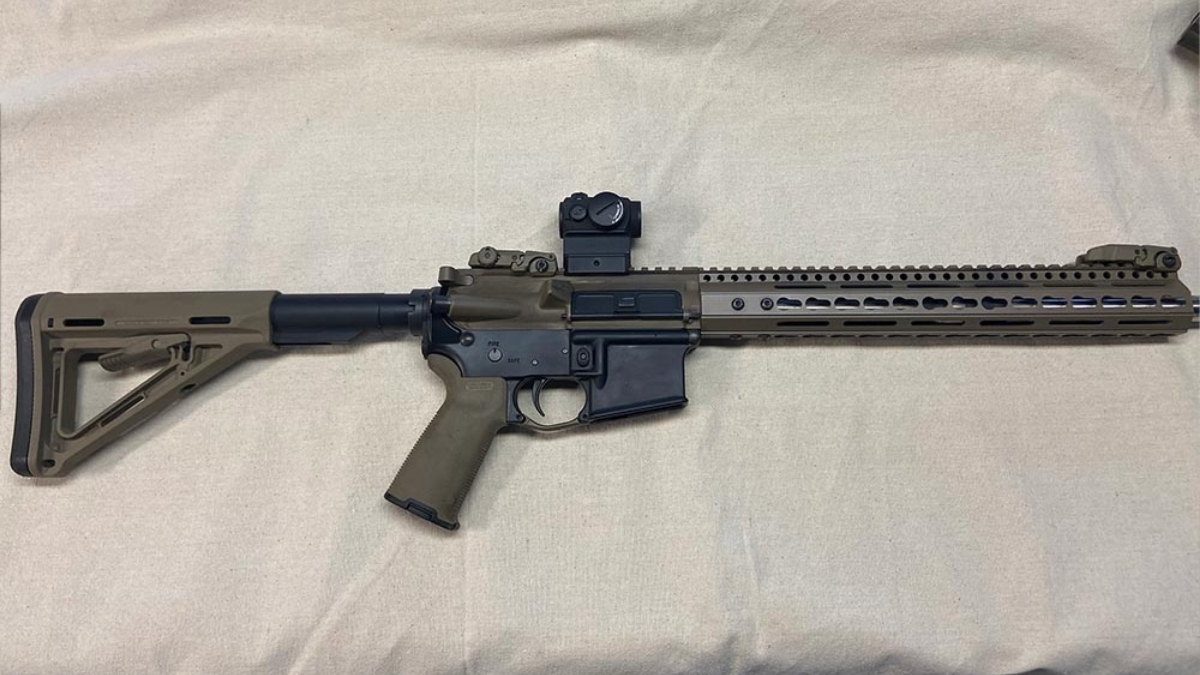
“Home-built” does not describe one single legal category. California has detailed requirements for privately manufactured or assembled firearms, including identification, manufacturing, possession, and transfer rules. Those rules also contain specific exceptions.
Possible Warning Signs
- The frame or receiver has no visible maker or serial-number markings.
- The main body appears 3D-printed, heavily machined, unfinished, or made from polymer with visible layer lines.
- The firearm combines ordinary commercial parts with a homemade-looking frame or receiver.
- Nearby boxes, receipts, or notes use terms such as “80%,” “unfinished receiver,” “frame blank,” “jig,” or “build kit.”
Not seeing a serial number from one position does not prove that a firearm lacks one. Some older firearms and other limited situations may be treated differently. A firearm that truly lacks a valid required state or federal serial number needs further review.
Do not engrave a number, apply for a number, or attempt to “correct” the firearm before its identity and history have been reviewed. Privately made firearms can also have significant transfer restrictions. (See Cal. Penal Code §§ 29180–29184.)
Official reference: California DOJ legal requirements for self-made firearms.
What Does Not Automatically Make a Gun Illegal?
The following facts may be relevant, but none of them settles a firearm’s current legal status by itself:
- A military-style appearance. California classifications can depend on exact names, operating systems, measurements, magazines, and installed parts—not appearance alone.
- Old age. A gun that looks old is not necessarily an antique, and a modern reproduction is not automatically treated like an original antique.
- Being inherited. A firearm lawfully possessed by the deceased owner does not necessarily pass automatically to a spouse, child, trustee, or beneficiary.
- Missing purchase paperwork. Families often cannot locate old receipts or registration records. Missing paperwork does not prove legality or illegality.
- A visible serial number. A number may help identify the firearm, but it does not establish registration status, ownership history, configuration, or legal transferability.
- A legal purchase years ago. Laws and configurations change. A firearm’s prior lawful purchase does not answer every current possession, sale, or transfer question.
- An off-roster handgun. The California handgun roster principally governs many dealer sales and manufacturing activities. It is not a complete list of every handgun that may lawfully be possessed, and several transaction categories are exempt.
Official reference: California DOJ Roster of Handguns Certified for Sale.
What Appearance and Markings Cannot Tell You
Even when a firearm’s make and model are known, appearance and markings alone generally cannot establish:
- Whether the firearm was reported stolen.
- Whether it is recorded to the person who possessed it.
- Whether a required assault-weapon, .50 BMG, federal, or other registration exists.
- Whether the person who possessed it was legally eligible to possess firearms.
- Whether an inheritance, interstate move, private transfer, or prior sale complied with the law.
- Whether a permit, exemption, antique status, curio-and-relic status, or another exception applies.
- Whether the firearm may lawfully be moved, sold, transferred, surrendered, or taken out of California.
A photograph or online model lookup may help with preliminary identification. It should not be treated as a final legal opinion or a substitute for inspecting the complete firearm in its current configuration.
What You Can Document Without Handling the Gun
From a safe position, and only when the information is already visible, write down:
- Where the firearm was found and how it was stored.
- The exact maker, importer, model, caliber, and serial-number markings you can see without moving it.
- Words such as “AUTO,” “BURST,” “AK,” “AR,” or “.50 BMG.”
- Whether an obvious tube-shaped muzzle device, folding stock, unusual grip, or other attachment is present.
- Whether registration letters, purchase records, trust documents, military paperwork, permits, or gunsmith invoices are nearby.
Photographs may help with preliminary identification when they can be taken without approaching, touching, or repositioning the firearm. Do not post serial numbers, registration letters, or estate documents publicly online.
When to Stop and Obtain Professional Guidance
A professional review is warranted when:
- The maker or model may appear on a named assault-weapon list.
- A serial number or other identifying mark appears removed, altered, covered, or obliterated.
- No valid identifying number can be found.
- The firearm appears home-built, unfinished, or 3D-printed.
- The gun appears unusually short, cut down, or converted from another type of firearm.
- Visible markings include “.50 BMG,” “AUTO,” or “BURST.”
- A loose device may change how rapidly or automatically a firearm fires.
- A magazine may accept more than 10 rounds.
- The firearm came from another state and has not been reviewed for California compliance.
- You cannot confidently identify what is present.
Do not test, modify, sell, surrender, or transport the firearm based only on an online article. A qualified firearm professional may help identify what is present and document its current configuration. A qualified California firearms attorney should address questions about legal possession, possible exposure, deadlines, registration, or exceptions.
Identification Without Requiring the Family to Move the Guns First
California Gun Services assists people who unexpectedly become responsible for unfamiliar firearms. An on-site inspection can make the firearms safe, document identifying information, and flag items that may need specialized handling or legal review without requiring the family to transport them first.
Frequently Asked Questions
Can a serial number tell me whether a gun is legal?
No. It may help identify the firearm, but a visible number does not establish its registration status, configuration, ownership history, or legal transfer status.
Are all AR-15- or AK-style rifles illegal in California?
No. Some exact makes, models, and series are named assault weapons. Other similar-looking firearms are evaluated under characteristic-based rules. Appearance alone is not enough.
Is an off-roster handgun illegal to possess?
Not automatically. The roster principally governs many dealer sales and manufacturing activities. Several other transaction categories have exemptions, and absence from the roster does not alone determine whether possession is lawful.
Can I keep a registered assault weapon I inherited?
Generally, it does not transfer like ordinary property. California DOJ states that a person who receives title to a registered assault weapon by will or intestate succession generally has 90 days to pursue one of the limited options allowed by law. (Cal. Penal Code § 30915.)
Can I take an unfamiliar gun to a dealer or police station?
Call first. Do not place a questionable firearm in a vehicle or arrive unannounced. A dealer may not be authorized to accept every restricted firearm, and California DOJ requires prior arrangements for relinquishing an assault weapon.
Start With Identification, Not Guesswork
Most families who contact me are not trying to become firearm experts. They want to keep everyone safe, follow the law, and understand what they found without accidentally making the situation worse.
The safest first step is simple: leave an unfamiliar firearm where it is, keep other people away, and obtain the right help before anyone handles, transports, modifies, sells, transfers, or surrenders it.
California Gun Services can provide on-site assistance for inherited firearms, estate collections, unfamiliar guns found in a home, and court-ordered relinquishments throughout our Southern California service area. We can identify and document the firearms, explain what may require additional review, and help determine which professional or agency should be involved next.
Official Sources and Further Reading
- California DOJ overview of key firearm laws
- California DOJ Assault Weapons and .50 BMG FAQs
- California DOJ assault-weapon definitions
- California DOJ assault-weapon characteristics
- California DOJ “Other” assault-weapon information
- California DOJ legal requirements for self-made firearms
- California DOJ information for new California residents
- California DOJ Roster of Handguns Certified for Sale
